

Here’s something oddly uncomfortable about holding a pencil in your non-dominant hand.
It feels wrong. Slow. Almost childish.
And yet… that’s exactly why I want you to try it.
As artists, we spend years training one hand to obey us. Clean lines, controlled shading, confident strokes. But what happens when you take that control away?
Here’s what actually happens.
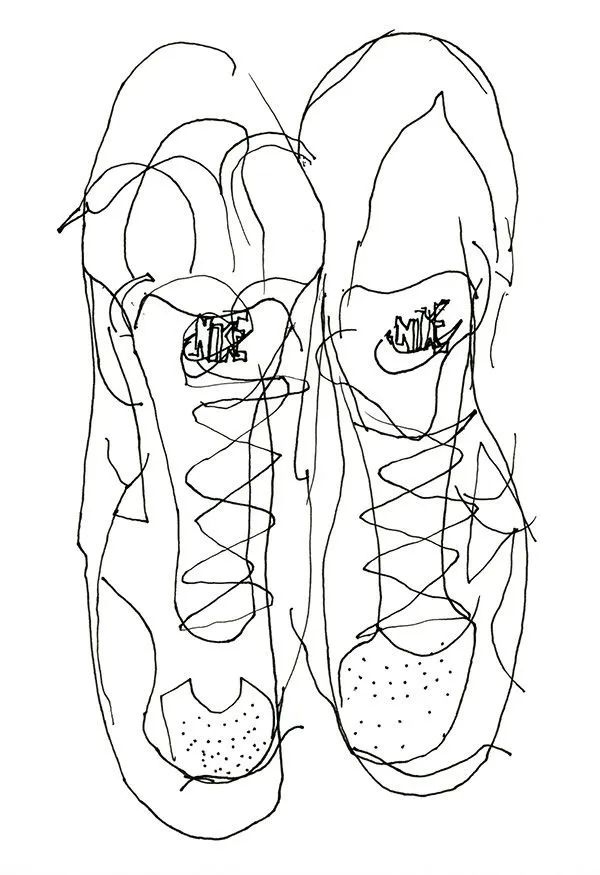
Day 1: Humbling… to say the least
I won’t romanticize this.
It was bad.
Lines were shaky, proportions were off, and even drawing a simple circle felt like a challenge. It reminded me of the very first time I picked up a pencil as a kid, except this time, I knew what I wanted to draw… I just couldn’t execute it.
And honestly? That disconnect was frustrating.
Day 2–3: Slowing down (whether I liked it or not)
By day two, I realized something: I couldn’t rush.
Every stroke required intention. I had to think before moving my hand, instead of relying on muscle memory like I usually do.
It forced me to be present.
Not in a poetic, “art is mindfulness” kind of way—but in a very real, slightly annoying way.
Still, something interesting started happening: I began observing shapes more carefully.
Day 4–5: Letting go of perfection
At some point, I stopped trying to make it look “good.”
Because it just wouldn’t.
And that’s when things got… fun.
Without the pressure to create something polished, I started experimenting more. My lines became expressive instead of precise. I focused less on results and more on movement.
It felt messy—but also freeing.
Day 6: A different kind of confidence
Not technical confidence.
But creative confidence.
I wasn’t afraid of “ruining” the drawing anymore, because honestly, the expectations were already low. And that removed a huge mental block.
I started drawing faster. Bolder. Even enjoying the unpredictability.
Day 7: So… Did I improve?
Yes—but not in the way you’d expect.
My non-dominant hand didn’t suddenly become amazing. It was still awkward, still less controlled.
But my awareness improved.
And weirdly… I felt more connected to the act of drawing itself
I noticed my habits more clearly
I became more patient
I relied less on autopilot
What this experiment actually teaches you
Drawing with your other hand isn’t about becoming ambidextrous.
It’s about breaking patterns.
When you remove skill, you’re left with pure observation, intention, and curiosity. And those are things we often lose as we get “better.”
It’s like pressing reset on your creativity.
Should you try it?
Yes—if you’re feeling stuck.
Yes—if you’re too focused on perfection.
Yes—if drawing has started to feel repetitive.
But don’t do it expecting beautiful results.
Do it for the discomfort.
Because sometimes, discomfort is exactly what your creativity needs.
Final thoughts
After 7 days, I went back to drawing with my dominant hand…
And everything felt easier.
Looser.
More intentional.
It was like my brain had been quietly rewired in the background.
So no, this experiment won’t magically make you a better artist overnight.
But it might change the way you approach your art.
And that’s even more valuable.
