

In the art world, there are many cliché jobs, and for that reason, I decided to start this series where I explain to you art jobs and what they are about. So, for today’s article, have you ever wondered what an art curator does? Let me tell you about it all.
What does an art curator do?
An art curator is the person who gives meaning and direction to an exhibition. They don’t “choose pretty artworks” and hang them on a wall. Their role is much deeper than that.
A curator selects artworks, but more importantly, they create a story.
Every exhibition you walk into, whether in a museum or a gallery, has a narrative behind it. Why are these pieces together? What explains the theme of the exhibition? Why this order? That’s the art curator’s work.
They research artists, study historical and cultural contexts, and then build an exhibition that communicates an idea to the public.
An art curator is a storyteller, not only someone with great taste in art
Think of a curator as a storyteller, but instead of communicating with words, they use artworks to convey a story.
They might build an exhibition around the following:
- a specific theme (identity, memory, politics, color …)
- a time period
- a movement
- or even a single artist
Their goal is to guide how you experience the art without you even realizing it.
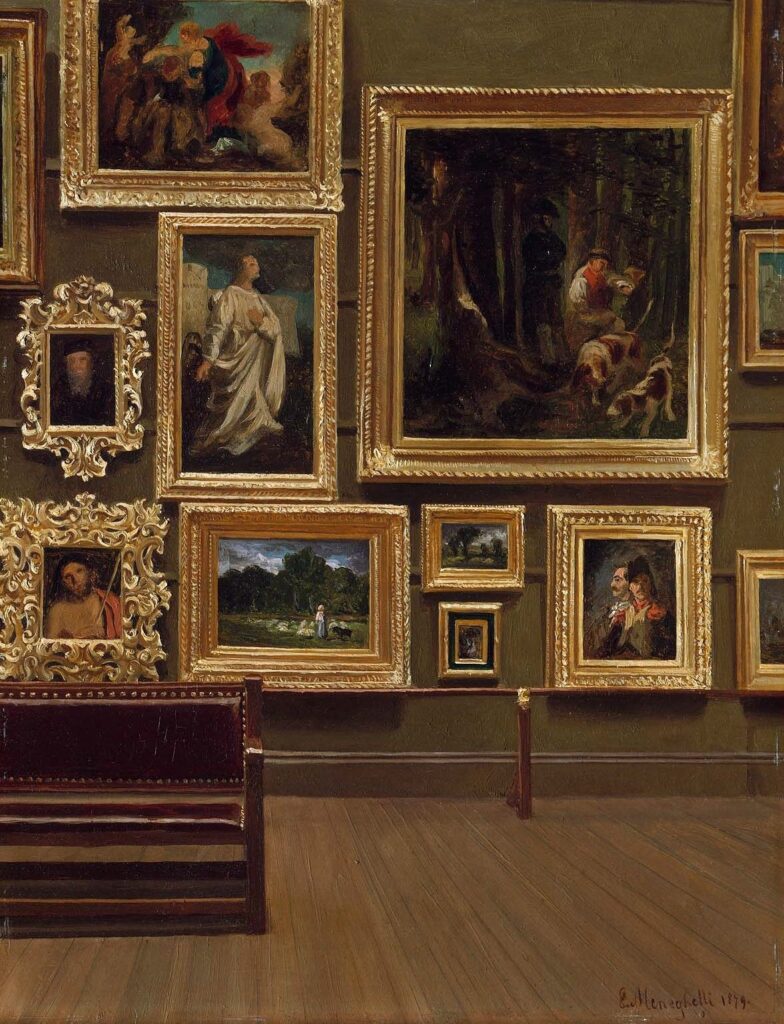
The lighting, the spacing between artworks, and the order in which you see them. None of it is random.

What are the daily tasks of a curator?
The job is actually a mix of creative and practical work. A curator usually
- Research artists and artworks
- Selects pieces for exhibitions
- Writes exhibition texts (the ones you read on the walls)
- Works with galleries, museums, and collectors
- Plans how the exhibition will look in the space
- Organizes loans and logistics (transport, insurance, etc.)
- Sometimes manages budgets and timelines
So yes, it’s creative, but also very organizational.
Do curators work only in museums?
Not at all.
Curators can work in:
- museums
- art galleries
- cultural institutions
- art fairs
- biennials
- even independently (freelance curators are very common today)
In fact, the rise of independent curators has changed the art world a lot. Many curators now create their own exhibitions in alternative spaces, not just traditional institutions.
Do you need a degree to become a curator?
Most curators have a background in art history, fine arts, or cultural studies. Many also pursue a master’s degree in curatorial studies.
But here’s the honest part: the degree alone is not enough.
Curating is a field where experience, networking, and your vision matter just as much, if not more.
You need to:
- understand art deeply
- develop your own perspective
- and build relationships in the art world
Is being a curator a good career?
It depends on what you’re looking for.
It’s a very exciting job if you love:
- working with artists
- building ideas
- organizing exhibitions
- and being part of the cultural scene
But it can also be competitive and sometimes unstable, especially at the beginning.
Many curators start with internships, assistant roles, or small independent projects before growing their careers.
Final thoughts
Being an art curator is all about vision.
It’s about seeing connections where others don’t and creating experiences that make people think, feel, and question what they see.
So next time you visit an exhibition, don’t just look at the artworks. Think about the person behind the story.
Because without the curator, the exhibition wouldn’t exist in the same way.
